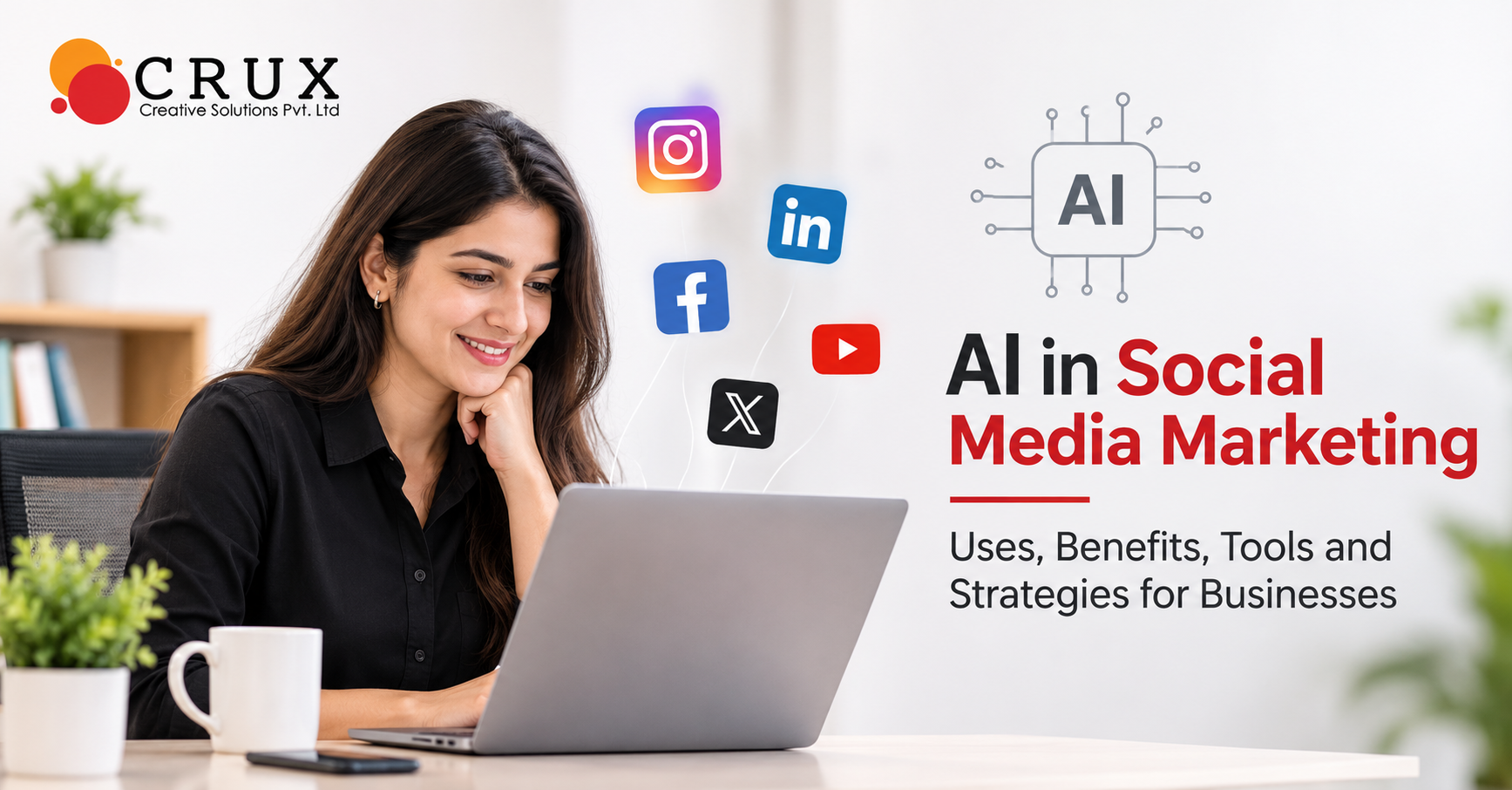
AI in Social Media Marketing: Uses, Benefits, Tools and Strategies for Businesses
Your audience is scrolling past hundreds of posts every day. So, how do you make your brand stand out, create content that gets noticed, and turn likes into actual business? The answer could lie in artificial intelligence. From generating scroll-stopping content and predicting audience interests to optimising ad campaigns and tracking engagement, AI in social media marketing is changing how businesses connect with customers. But is AI really making marketing smarter, or is there more to it than automation? Let's explore how businesses can use AI to stay relevant, save time, and get more out of every social media interaction.
What Is AI in Social Media Marketing?
AI in social media marketing refers to using artificial intelligence technologies to plan, create, distribute, analyse and improve social media content and campaigns. It uses machine learning, natural language processing and generative AI to understand audience behaviour, automate tasks and identify opportunities for better engagement.
For example, a B2B company can use AI to identify frequently discussed industry challenges, generate LinkedIn post ideas and analyse which topics attract potential customers. A marketer can then review these suggestions and develop content that reflects the company's expertise.
AI supports marketing teams by reducing manual work and providing useful insights. It does not replace the creativity, strategic thinking and customer understanding required to build a recognisable brand.
How Is AI Used in Social Media Marketing?
AI has applications across almost every stage of social media management. Businesses can use it to improve content production, understand their audiences, manage campaigns and make better marketing decisions.
1. AI-Powered Social Media Content Creation
Creating fresh content consistently can be challenging, particularly for businesses managing several social media accounts. AI writing and generative tools help marketers develop content ideas, captions, headlines, content briefs and post variations.
They can also adapt a single message for different platforms. For instance, a company announcement can become a professional LinkedIn post, an Instagram caption and a short Facebook update.
However, AI-generated content requires human review. Marketers must check facts, refine the language and ensure every post reflects the brand's voice.
2. AI for Social Media Scheduling and Planning
AI-powered scheduling tools help marketing teams organise content calendars and streamline publishing workflows.
By analysing historical account data, these tools can identify patterns in audience activity and suggest potential publishing times. They can also help teams organise upcoming campaigns, assign content for approval and manage posts across multiple platforms.
This makes it easier to maintain a consistent publishing schedule without managing every post manually.
3. AI for Audience Research and Sentiment Analysis
Understanding what customers think about a brand is essential for effective marketing.
AI-powered sentiment analysis examines comments, reviews, mentions and other available social interactions to identify positive, negative and neutral opinions. It can also highlight recurring customer questions, complaints and product preferences.
For example, a software company may discover that users frequently discuss onboarding difficulties. Its marketing team can use this insight to create tutorials, product explainers and educational posts.
4. AI in Social Media Advertising
AI helps advertisers analyse audiences, develop creative variations and identify campaign optimisation opportunities.
Marketing teams can use generative AI to create alternative headlines, ad descriptions and visual concepts. Automated advertising systems can also use campaign signals to support decisions about audience targeting, budget allocation and creative delivery.
Marketers should still monitor campaign quality, conversion data and advertising costs rather than relying entirely on automated recommendations.
5. AI for Social Listening and Trend Discovery
Social listening involves monitoring online conversations about a brand, industry, product or relevant topic.
AI can analyse large volumes of publicly available conversations and identify recurring themes, emerging discussions and potential content opportunities.
For example, a cybersecurity company can monitor discussions around data breaches and changing security concerns. Its marketing team can use these insights to develop timely educational content.
Not every trending topic deserves a brand response. Teams should check its relevance and accuracy before joining a conversation.
6. AI Chatbots and Social Customer Service
AI chatbots help businesses respond to common customer questions through supported social messaging channels.
They can provide information about business hours, services, product availability and basic support processes. More complex enquiries can be transferred to human representatives.
Businesses should establish clear escalation procedures so customers can reach a person when they need detailed assistance or personalised support.
7. AI for Social Media Analytics and Reporting
AI-powered analytics tools help marketers interpret campaign data and identify performance patterns.
They can summarise engagement, reach, impressions, clicks, audience growth and conversion trends. Teams can compare different content formats and identify which campaigns deserve further attention.
Instead of manually reviewing multiple reports, marketers can use AI-generated summaries as a starting point for their next planning cycle.
What Are the Benefits of AI in Social Media Marketing?
AI offers several practical benefits for businesses that want to improve their social media operations.
Faster Content Planning and Production
AI can generate content ideas, initial drafts and creative variations in less time. Marketing teams can spend less time on repetitive tasks and more time refining campaigns and developing original ideas.
More Relevant Content Personalisation
AI can help businesses identify audience interests and develop content for different customer segments. A financial services company, for example, can create separate educational posts for small business owners and individual investors.
Improved Audience Insights
AI can identify recurring questions, engagement patterns and customer sentiment. These insights help marketers understand what their audiences want to learn and which topics deserve attention.
More Efficient Campaign Testing
Businesses can develop multiple versions of ad copy and creative concepts for testing. Comparing their performance helps marketers understand which messages attract attention and generate conversions.
Streamlined Reporting and Analysis
AI can summarise large datasets, identify performance changes and prepare initial reports. This makes campaign reviews more efficient and helps teams focus on actionable findings.
Better Support for Multi-Platform Publishing
AI helps adapt content for different platforms, reducing the effort involved in managing multiple accounts. Marketers can maintain a consistent brand message while adjusting the format and presentation.
Improved Marketing Resource Allocation
Automation reduces repetitive work and helps teams identify underperforming campaigns. Businesses can use these insights to prioritise budgets, creative resources and marketing activities.
Best AI Tools for Social Media Marketing
The right AI tools depend on business objectives, team size, budget and existing marketing workflows. Rather than choosing software based on popularity, businesses should evaluate what each category can accomplish.
| Tool category | What to evaluate |
| Content creation | Caption quality, tone control and editing |
| Scheduling and management | Content calendars, approvals and publishing |
| Social listening | Sentiment analysis and conversation monitoring |
| Advertising | Creative testing and campaign insights |
| Analytics | Performance comparisons and reporting |
| Design and video | Templates, editing and brand consistency |
How to Choose the Right AI Tool for Your Business?
Before investing in a tool, consider:
- Whether it supports your primary social media platforms.
- Whether its features match your marketing requirements.
- Whether it integrates with your existing systems.
- Whether it offers suitable privacy and data controls.
- Whether its pricing fits your budget.
- Whether your team can use it without extensive training.
Start with a few essential tools and expand your technology stack as your requirements grow.
How to Create an AI-Powered Social Media Marketing Strategy?
AI delivers better results when it supports a clearly defined marketing strategy. Businesses can follow these seven steps.
1. Define business objectives and target audiences.
Decide whether your primary goal is brand awareness, website traffic, lead generation, customer engagement or sales. Identify the audience you want to reach.
2. Audit existing social media accounts and performance.
Review your current content, posting frequency, engagement, audience growth and campaign results. Identify gaps and opportunities.
3. Select suitable AI tools.
Choose tools based on specific requirements such as content creation, scheduling, social listening or reporting.
4. Build a content strategy and publishing calendar.
Plan educational posts, product updates, customer stories, videos and promotional campaigns. Assign each content type a clear purpose.
5. Create platform-specific content with human oversight.
Use AI to prepare drafts and creative variations. Have marketers review the messaging, check facts and adapt each post to its platform.
6. Test creative formats and messaging.
Experiment with different headlines, visuals, video formats and calls to action. Evaluate performance against your campaign objectives.
7. Measure results and refine the strategy.
Review engagement, traffic, enquiries and conversions. Use these findings to improve upcoming content and campaigns.
Challenges and Risks of Using AI in Social Media Marketing
AI can improve marketing workflows, but careless implementation can damage brand credibility and customer trust.
Generic or Repetitive AI-Generated Content
AI-generated posts may sound similar to content published by other brands. Businesses should add original insights, examples and a distinct brand voice.
Inaccurate Information and Brand-Safety Risks
AI can generate incorrect facts, misleading claims or unsuitable messaging. Review statistics, product information and industry statements before publication.
Customer Data Privacy and Consent
Businesses should avoid entering confidential customer information into unapproved AI tools. Follow applicable privacy laws, consent requirements and internal data policies.
Copyright and Intellectual Property Considerations
AI-generated text, images and videos may raise copyright, ownership and licensing questions. Check the terms of the tools used and secure the necessary permissions for third-party assets.
Bias in Automated Analysis
AI systems can misinterpret audience sentiment or reflect biases in their training data. Validate important findings against actual customer feedback.
Over-Automation of Customer Communication
Automated replies can feel impersonal when customers have complex concerns. Provide clear options for human assistance.
Why Human Review Remains Essential?
Human oversight ensures that content is accurate, appropriate and consistent with brand values. Approval workflows, editorial guidelines and factual checks should remain part of every AI-supported marketing process.
AI in Social Media Marketing Trends to Watch
AI capabilities continue to develop, creating new opportunities for social media teams.
Generative AI for Creative Variations
Businesses can produce multiple versions of headlines, captions, images and advertising concepts to support creative testing.
AI-Assisted Short-Form Video Production
Video creation tools increasingly support script development, image-to-video generation, editing, voiceovers and translation. TikTok Symphony and YouTube Shorts are examples of this direction.
More Personalised Customer Experiences
AI can help businesses tailor content and responses to audience interests, previous interactions and customer requirements.
AI-Supported Social Listening
Improved analysis capabilities can help brands identify recurring conversations, emerging concerns and relevant industry discussions.
Automation of Repetitive Marketing Tasks
Scheduling, reporting, caption drafting and content organisation are likely to become more integrated into marketing workflows.
AI-Assisted Campaign Measurement
AI can help marketers interpret campaign results, compare creative variations and identify optimisation opportunities.
Human Creativity Combined With AI Workflows
The strongest approach combines AI efficiency with original storytelling, strategic thinking and human judgement. Technology can accelerate production, but audience relevance remains essential.
How to Measure the ROI of AI in Social Media Marketing?
Measuring ROI helps businesses understand whether AI investments improve marketing performance and operational efficiency.
Engagement Rate and Meaningful Interactions
Track comments, shares, saves and other relevant interactions. Evaluate whether engagement reflects genuine interest rather than simply increased activity.
Reach, Impressions and Audience Growth
Compare how many people see your content and whether your audience grows over time.
Click-Through Rate and Website Traffic
Measure how effectively social posts encourage users to visit your website or landing pages.
Leads and Conversion Rate
Track enquiries, registrations, downloads and sales generated through social media campaigns.
Cost per Lead and Advertising Efficiency
Compare advertising spend with the number of qualified leads generated. Assess whether AI-assisted testing improves campaign efficiency.
Content Production Time and Workflow Efficiency
Measure the time spent on research, drafting, editing, approvals and reporting before and after introducing AI.
Establish a baseline before adopting new tools and compare results over a consistent period. Remember that changes in campaign performance may also reflect budgets, seasonality, competition and market conditions. AI should not receive credit for every improvement.
Read Also: The Power of Social Media Marketing: Trends to Watch
How Crux Creative Solutions Helps Businesses With Social Media Marketing?
AI can make social media marketing more efficient, but businesses still need a clear strategy, strong creative direction and consistent brand communication.
Crux Creative Solutions helps businesses develop social media strategies that connect content with wider marketing and business objectives. From planning campaigns to creating engaging visuals, the focus is on building a consistent brand presence across relevant platforms.
Businesses looking for a social media marketing company in Gurgaon can benefit from a structured approach that includes:
- Social media strategy: Develop content plans around business objectives, target audiences and platform requirements.
- Creative content development: Create captions, graphics, carousels and campaign assets that communicate brand messages clearly.
- Campaign support: Develop and manage campaigns with a focus on audience relevance and measurable outcomes.
- Brand consistency: Maintain consistent messaging, visual identity and communication across social channels.
- Performance analysis: Review engagement, traffic and campaign performance to identify opportunities for improvement.
As a branding agency in Gurgaon, Crux also recognises the importance of connecting social media communication with a consistent brand identity. Strong visual design and clear messaging help businesses create a recognisable presence.
For businesses looking to make video a central part of their content strategy, social media video production services in Gurugram can support the creation of engaging visual content suited to different platforms.
Whether you want to improve brand awareness, generate qualified leads or strengthen customer engagement, Crux Creative Solutions can help align your social media activities with your business goals.
Ready to build a stronger social media presence? Connect with Crux Creative Solutions to discuss your marketing objectives and explore the right strategy for your business.

Princy Cycil
Meet Princy Cycil, Senior content writer of Crux, with 6 years of experience. She has written for tech, education, healthcare, finance, e-commerce, travel, FMCG, and lifestyle brands. A B.Com graduate, she started her career with accounting but realized she loves words more than numbers. She creates blogs, social media posts, and web content that connect and engage. When she's not writing, she's reading books, binge-watching Netflix, or sipping coffee.
Share:



 Shelly Bhasin Bawa