Why Small Businesses Must Have a Professional Website?
A business that lacks a structured online presence often struggles to stay visible in a market where customers rely heavily on digital discovery before making decisions. This shift has not been gradual; it has been decisive, and it continues to shape how trust is built and how purchases happen across industries. When people search for products or services, they expect immediate access to reliable information, and if they cannot find your business online, they move on without hesitation. This behavior explains why small businesses need a website, not as a luxury, but as a necessity that directly influences survival, credibility, and long-term growth potential.
The Evolution of Customer Decision-Making
Modern customers rarely make decisions based on a single touchpoint, and their journey typically begins with an online search that helps them compare options, evaluate credibility, and understand value before initiating any form of contact. Even when recommendations come from trusted sources, people still validate those suggestions through digital channels, which means your website often becomes the first real interaction they have with your brand.
This shift has redefined expectations. Customers now expect clarity, structured information, and ease of access, all within seconds of landing on a page. If your business fails to meet these expectations, it creates friction, and friction leads to abandonment. A professional website removes that barrier by presenting information in a way that aligns with how users think and navigate.
Building Trust Through Structure and Transparency
Trust is rarely built through claims alone; it is built through presentation, consistency, and proof, all of which are communicated effectively through a well-developed website. A professional layout, combined with accurate content and clear navigation, signals reliability and attention to detail, which are critical to shaping customer perception.
The importance of website for small business becomes clear when you consider how users interpret design and content. A poorly structured website raises doubts, while a polished one reinforces legitimacy. Elements such as testimonials, certifications, detailed service descriptions, and transparent contact information all contribute to reducing uncertainty.
Customers do not want to search for answers across multiple platforms. They prefer a single, reliable source where everything is clearly presented. A professional website fulfills this expectation by organizing information in a logical and accessible manner.
Ownership and Control Over Digital Presence
Relying solely on third-party platforms limits your ability to control how your business is represented, as algorithms, policies, and visibility rules can change without notice, affecting how often your content is seen. A website eliminates this dependency by giving you full control over your messaging, design, and customer experience.
This control allows you to maintain consistency across all touchpoints, ensuring that your brand is presented accurately at all times. It also enables you to structure content in a way that aligns with your business goals, rather than adapting to platform constraints.
When discussing website importance for business growth, ownership plays a central role because it ensures stability and predictability in how your business communicates with its audience.
Search Visibility and Organic Growth
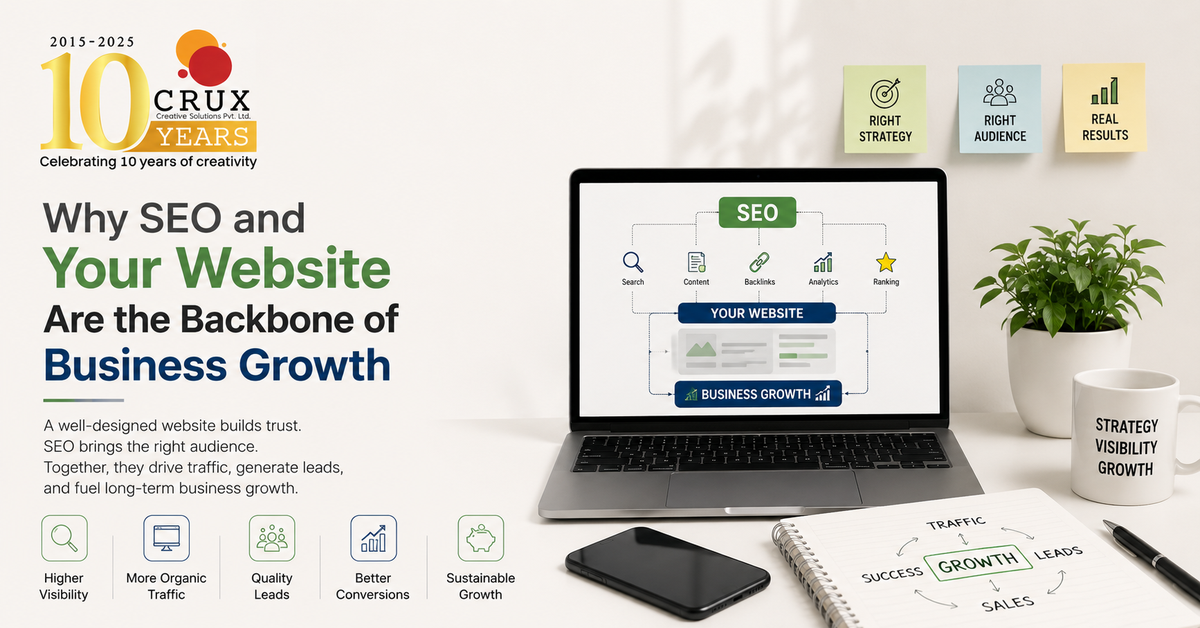
Search engines serve as the primary gateway for discovering new businesses, and a professional website allows you to position your brand within this ecosystem through structured content and targeted optimization. By aligning your website with relevant search queries, you increase the likelihood of being discovered by users who are already interested in what you offer.
Organic visibility differs from paid advertising because it builds over time and continues to generate traffic without ongoing expenditure. Each optimized page contributes to your overall presence, creating a compounding effect that strengthens your reach.
A well-structured website ensures that search engines can understand and index your content effectively, which improves ranking potential and drives consistent traffic. This process directly supports long-term growth by connecting your business with high-intent users.
Read Also: Find the Best Website Design Company for Your Business
Enhancing User Experience and Engagement
User experience is a critical factor that determines whether visitors stay on your website or leave within seconds, and it is influenced by multiple elements, including design, navigation, loading speed, and content clarity. A professional website integrates these elements seamlessly, creating an environment where users can interact with your business without confusion or delay.
When users find it easy to navigate your website, they are more likely to explore multiple pages, engage with your content, and take meaningful actions. This increased engagement improves conversion rates and strengthens your overall digital performance.
Poor user experience, on the other hand, creates frustration and leads to immediate drop-offs, which not only reduces potential revenue but also impacts your search rankings negatively.
Converting Visitors Into Leads and Customers
A website is not just a platform for information; it is a tool designed to guide users toward specific actions that align with your business objectives. These actions may include filling out inquiry forms, making purchases, or contacting your team for further details.
The effectiveness of a website in generating leads depends on how well it is structured. Clear calls to action, concise messaging, and strategically placed information all contribute to guiding users through the decision-making process.
Many businesses underestimate how consistently a website helps generate leads when it is designed with intent. By addressing user concerns, highlighting value, and simplifying the next steps, a professional website transforms passive visitors into active prospects.
Competing in a Crowded Market
Small businesses often face competition from larger organizations that have more resources and wider reach, but a professional website allows them to compete effectively by focusing on clarity, relevance, and user experience.
Digital platforms prioritize quality over size, which means a well-designed website can outperform larger competitors if it delivers better value to users. Customers are more concerned with finding the right solution than choosing the biggest brand, and a professional website helps communicate that value clearly.
This ability to compete on equal terms makes a website an essential asset for small businesses looking to establish a strong market presence.
Strengthening Brand Identity and Recognition
A website serves as the foundation of your brand identity, as it brings together visual elements, messaging, and overall experience into a cohesive structure that users can recognize and remember. Consistency across these elements reinforces your positioning and helps build familiarity over time.
The role of a website for branding and marketing becomes evident when you consider how each page contributes to perception. From the homepage to service pages, every interaction shapes how users view your business.
A strong brand identity not only attracts customers but also encourages repeat engagement, which is essential for long-term growth and sustainability.
Leveraging Data for Strategic Decisions
One of the most valuable aspects of a professional website is its ability to provide detailed insights into user behavior, allowing you to understand how visitors interact with your content and where improvements can be made.
These insights include metrics such as page views, time spent on site, and conversion rates, all of which help identify strengths and weaknesses in your strategy. By analyzing this data, businesses can make informed decisions that improve performance and drive growth.
This data-driven approach reduces uncertainty and enables continuous optimization, ensuring that your website remains effective over time.
Scalability and Long-Term Adaptability
As your business evolves, your website should be able to adapt to new requirements, whether that involves adding new services, expanding into new markets, or integrating additional features. A professional website is designed with scalability in mind, allowing it to grow alongside your business.
This flexibility ensures that your digital presence remains relevant and aligned with your objectives, eliminating the need for frequent redesigns or restructuring.
Scalability also supports innovation, as new technologies and functionalities can be integrated without disrupting the existing framework.
Local Visibility and Market Reach
For businesses operating in specific regions, local visibility plays a crucial role in attracting customers, and a website enhances this visibility by making your business discoverable through location-based searches.
Collaborating with a website development company in Gurgaon or a similar local partner ensures that your website is optimized for regional audiences, which improves search rankings and increases engagement.
Local optimization includes elements such as location-specific content, maps, and contact details, all of which make it easier for customers to find and connect with your business.
The Role of Professional Design
Design is not just about aesthetics; it is about functionality and clarity, both of which influence how users interact with your website. A professionally designed website ensures that every element serves a purpose, guiding users toward relevant information and actions.
The value of professional website design services lies in their ability to create a balanced experience where visuals and content work together seamlessly. This balance improves usability and enhances overall perception.
Good design simplifies complexity, making it easier for users to understand your offerings and engage with your business.
Read Also : Website Important For Your New Business
Customization for Unique Business Needs
Every business operates differently, which means a one-size-fits-all approach rarely delivers optimal results. Customization allows your website to align with your specific requirements, ensuring that it supports your operations effectively.
Through custom website development services, features can be tailored to match your workflows, whether that involves e-commerce capabilities, booking systems, or specialized content structures.
This level of customization improves efficiency and ensures that your website functions as a practical tool rather than just a digital presence.
Mobile Responsiveness and Accessibility
With a significant portion of users accessing websites through mobile devices, responsiveness has become a critical requirement rather than an optional feature. A responsive website adapts to different screen sizes, ensuring that users have a consistent experience regardless of the device they use.
The importance of responsive website design services lies in their ability to maintain usability and clarity across platforms, which directly impacts engagement and conversion rates.
A mobile-friendly website also improves search rankings, as search engines prioritize responsive designs in their algorithms.
Cost Efficiency and Long-Term Value
While the initial investment in a professional website may seem significant, its long-term benefits far outweigh the cost, as it continues to generate value through consistent visibility, lead generation, and customer engagement.
Unlike paid advertising, which requires continuous spending, a website provides ongoing returns without additional investment, making it a cost-effective solution for sustainable growth.
This efficiency makes a website one of the most valuable assets a small business can invest in.
Read Also : 25 Minimalist Website Designs That Drive Conversion
Conclusion
A professional website is not simply a digital extension of your business; it is a central component of your growth strategy that influences visibility, credibility, and customer engagement. It provides control, supports marketing efforts, and enables data-driven decisions that improve performance over time.
For small businesses, the question is no longer whether a website is necessary, but how effectively it is built and managed. A well-structured website creates opportunities, strengthens brand identity, and ensures that your business remains competitive in an increasingly digital marketplace.

Princy Cycil
Meet Princy Cycil, Senior content writer of Crux, with 6 years of experience. She has written for tech, education, healthcare, finance, e-commerce, travel, FMCG, and lifestyle brands. A B.Com graduate, she started her career with accounting but realized she loves words more than numbers. She creates blogs, social media posts, and web content that connect and engage. When she’s not writing, she’s reading books, binge-watching Netflix, or sipping coffee.
Share: