Everything You Should Know About Business Website Design
Let's be honest. When someone hears about your business for the first time, the very first thing they do is Google you. And what they find — or don't find — shapes their entire opinion of you in seconds.
Your business website is no longer optional. It's your digital storefront, your first impression, your 24/7 salesperson, and your most powerful marketing tool — all rolled into one. Yet so many businesses either don't have a website, have one that's embarrassingly outdated, or have one that looks great but does absolutely nothing for their bottom line.
This guide is going to change that. Whether you're starting from scratch or thinking about a redesign, here's everything you should know about business website design — explained simply, without the tech headaches.
What Exactly Is Business Website Design?
Business website design is more than choosing colors and fonts. It's the strategic process of creating a digital space that represents your brand, communicates your value, engages your audience, and ultimately drives action — whether that's a phone call, a purchase, a form submission, or a booking.
Good business website design sits at the intersection of aesthetics and functionality. It has to look professional, load fast, work perfectly on mobile, and guide visitors toward doing what you want them to do. Miss any one of these elements and you're leaving money on the table.
Why Your Business Absolutely Needs a Professional Website?
Some small business owners still think a Facebook page or an Instagram profile is enough. It isn't. Here's why.
Social media platforms are rented land. The algorithm changes, the platform could shut down, your account could get suspended — and suddenly your entire online presence is gone. Your website, on the other hand, is property you own completely.
A professional website also builds credibility in a way social media simply can't. When a potential customer lands on a well-designed, fast, informative website, they feel confident doing business with you. When they can't find a website at all — or find one that looks like a relic from the early internet — they quietly move on to a competitor.
This is why businesses across India, especially in competitive markets like Delhi-NCR, are increasingly turning to professional agencies for website development in Gurgaon to make sure their digital presence is strong, polished, and conversion-focused.
The Core Elements of a Great Business Website
Understanding what makes a website truly effective helps you make smarter decisions when working with a design agency. Here are the non-negotiables.
A Clear Purpose
Every great business website starts with a clear answer to one question: what do you want visitors to do? Buy a product? Call your office? Fill out a contact form? Request a quote? This purpose should drive every design decision — from the layout to the color scheme to where buttons are placed.
Strong First Impression Design
You have roughly three to five seconds to convince a visitor to stay on your website. Your homepage design needs to immediately communicate who you are, what you do, and why someone should care. A cluttered, confusing, or outdated homepage is the fastest way to lose potential customers.
Mobile Responsiveness
More than 60% of all internet browsing happens on mobile devices. If your website doesn't look and work perfectly on a smartphone, you're alienating the majority of your potential audience. Mobile responsiveness isn't a bonus feature anymore — it's a basic requirement.
Fast Loading Speed
Studies show that if a website takes more than three seconds to load, most visitors abandon it. Page speed affects not just user experience but also your Google search rankings. A slow website costs you traffic and customers simultaneously.
Easy Navigation
Visitors should be able to find what they're looking for within two clicks. If your menu is confusing, your pages are poorly organized, or important information is buried deep in the site, people will leave out of frustration.
Compelling Content
Design draws people in, but content keeps them there. Your website needs clear, well-written content that speaks directly to your target audience's needs, answers their questions, and builds trust in your brand.
Strong Calls to Action
Every page on your website should have a clear next step for the visitor — a button, a form, a phone number. These calls to action are what convert passive browsers into active leads and customers.
Read Also : How to Find the Right Website Design Company in India?
Types of Business Websites
Not all websites are created equal, and understanding the different types helps you figure out exactly what your business needs.
- Brochure Websites are simple, informational sites that tell visitors who you are, what you offer, and how to contact you. They're perfect for service-based businesses, consultants, and local shops that primarily want an online presence without complex features.
- E-commerce Websites are built specifically for selling products online. They include product pages, shopping carts, payment gateways, and order management systems. These are significantly more complex to build and maintain.
- Portfolio Websites are used by creative professionals — photographers, designers, architects — to showcase their work and attract clients.
- Landing Pages are single-page websites designed for one specific goal, like capturing leads for a particular campaign or promoting a specific product or service.
- Corporate Websites are larger, multi-page websites used by established companies to communicate their brand story, services, team, and values to clients, investors, and partners.
Knowing which type you need before approaching a website development company in Gurugram will save you time, money, and confusion during the project.
The Website Design Process — What to Expect?
If you've never had a website built before, the process can feel mysterious. Here's a straightforward breakdown of how it typically works with a professional agency.
- Discovery and Planning is the first stage, where the agency learns about your business, your goals, your target audience, and your competitors. This is the foundation everything else is built on. Don't rush it.
- Wireframing comes next — this is essentially a blueprint of your website. It maps out where content, images, and buttons will go on each page, without any visual design applied yet. It's like the floor plan of a building before any construction begins.
- Visual Design is where your website starts to look like something. The agency creates mockups showing colors, typography, imagery, and overall aesthetic. This is where your brand identity really comes to life on screen.
- Development is when designers hand off the approved mockups to developers who build the actual, functioning website. This stage involves coding, database setup, plugin integration, and making everything work together seamlessly.
- Testing is a critical stage that many budget agencies skip — and they shouldn't. The website is tested across different browsers, devices, and screen sizes to make sure everything works perfectly before it goes live.
- Launch and Handover is the exciting final step. The website goes live, and the agency should walk you through how to manage it, make basic updates, and who to contact if something breaks.
- Read Also : 9 Elements of a Good Web Design
Common Website Design Mistakes Businesses Make
Learning from others' mistakes is always smarter than making your own. Here are the most common pitfalls businesses fall into.
- Prioritizing beauty over function. A gorgeous website that confuses visitors and doesn't generate leads is just expensive decoration. Design should always serve the business goal, not the designer's ego.
- Ignoring SEO from the start. Search engine optimization needs to be baked into the website from day one — in the site structure, the page titles, the content, the image tags, and the loading speed. Trying to add SEO after the fact is like trying to add plumbing to a house that's already been built.
- Forgetting about the target audience. Many business owners design websites for themselves rather than for their customers. The language, imagery, and user experience should all be built around what your audience needs and expects.
- No clear contact information. This sounds basic, but you'd be amazed how many business websites make it genuinely difficult to find a phone number or email address. Make it easy for people to reach you.
- Not updating the website. A website with a blog post from three years ago, a "coming soon" section that's been there forever, or outdated team photos sends a signal that the business isn't active or trustworthy. Websites need regular love and attention.
How Website Design and Digital Marketing Work Together?
Here's something many business owners don't realize until they've already made the mistake: a website without a marketing strategy is just a digital brochure sitting in a dark corner of the internet.
Getting traffic to your website requires active, ongoing effort. That means search engine optimization, content marketing, paid advertising, and — crucially — social media.
Social media and your website need to work in harmony. Your social media profiles drive traffic to your website. Your website converts that traffic into customers. When one is weak, the other suffers. This is why the most successful businesses work with agencies that handle both.
If you're a business in the Delhi-NCR region, partnering with a social media marketing company in Gurgaon that also handles your web design means your entire digital ecosystem is aligned. The branding is consistent, the messaging is cohesive, and campaigns are built around driving people to a website that's actually designed to convert them.
A social media marketing agency in Gurgaon that understands your website architecture can create far more effective campaigns because they know exactly where to send people and what experience those people will have when they arrive. It's a level of coordination that simply isn't possible when your web team and your social media team are completely separate entities with no communication between them.
What Makes Indian Website Design Companies Stand Out?
India has earned a well-deserved global reputation for producing world-class digital talent. Indian web design agencies bring a powerful combination of technical expertise, creative thinking, and cost-effectiveness that's hard to beat.
The country produces hundreds of thousands of engineering and design graduates every year. The IT infrastructure in cities like Bengaluru, Mumbai, Hyderabad, and the NCR region is world-class. And the sheer volume of diverse projects that Indian agencies handle — from local small businesses to global corporations — gives them a breadth of experience that sharpens their skills rapidly.
For businesses within the region, working with a website development company gurugram means access to this talent pool with the added advantage of local market understanding, proximity, and easier communication.
How Much Should a Business Website Cost in India?
Pricing in India varies enormously based on complexity, agency reputation, and what's included in the package. Here's a general ballpark to set realistic expectations.
Be cautious of agencies offering complete websites for ₹5,000 or ₹8,000. These are almost always template-based, poorly optimized, and come with little to no support. You get what you pay for — and a bad website can cost far more in lost business than you saved on the build.
Questions to Ask Before Hiring a Website Design Agency
Before signing anything, make sure you get satisfying answers to these questions.
- Will my website be custom-designed or built from a template?
- Who owns the website and all its files once the project is complete?
- What happens if I'm not happy with the design direction?
- Do you provide website hosting, and if so, what are the terms?
- How will you ensure my website ranks on Google?
- What does your support look like six months after launch?
The answers will tell you everything you need to know about whether this agency is the right fit for your business.
Read Also : How to Find the Best Website Design Company for Your Business
Final Thoughts
Your business website is one of the most important investments you'll ever make. It works for you around the clock, represents your brand to the world, and — when done right — actively generates revenue while you sleep.
The key is to approach it with the same seriousness you'd apply to any major business decision. Understand what you need, choose the right agency, think beyond just the design to the full digital marketing picture, and treat your website as the living, evolving asset it truly is.
FAQs
1. What is the difference between a domain name and web hosting, and do I need both?
Yes, you need both — and they serve very different purposes. A domain name is your website's address on the internet, for example www.yourbusiness.com. Web hosting is the server where your website's files actually live. Think of it this way: the domain is your street address and the hosting is the actual building. Without both working together, your website simply cannot exist online. Most agencies will help you set up both, but always clarify who manages them and what happens to your domain if you ever switch agencies.
2. What is the difference between UI and UX, and why do both matter for my business website?
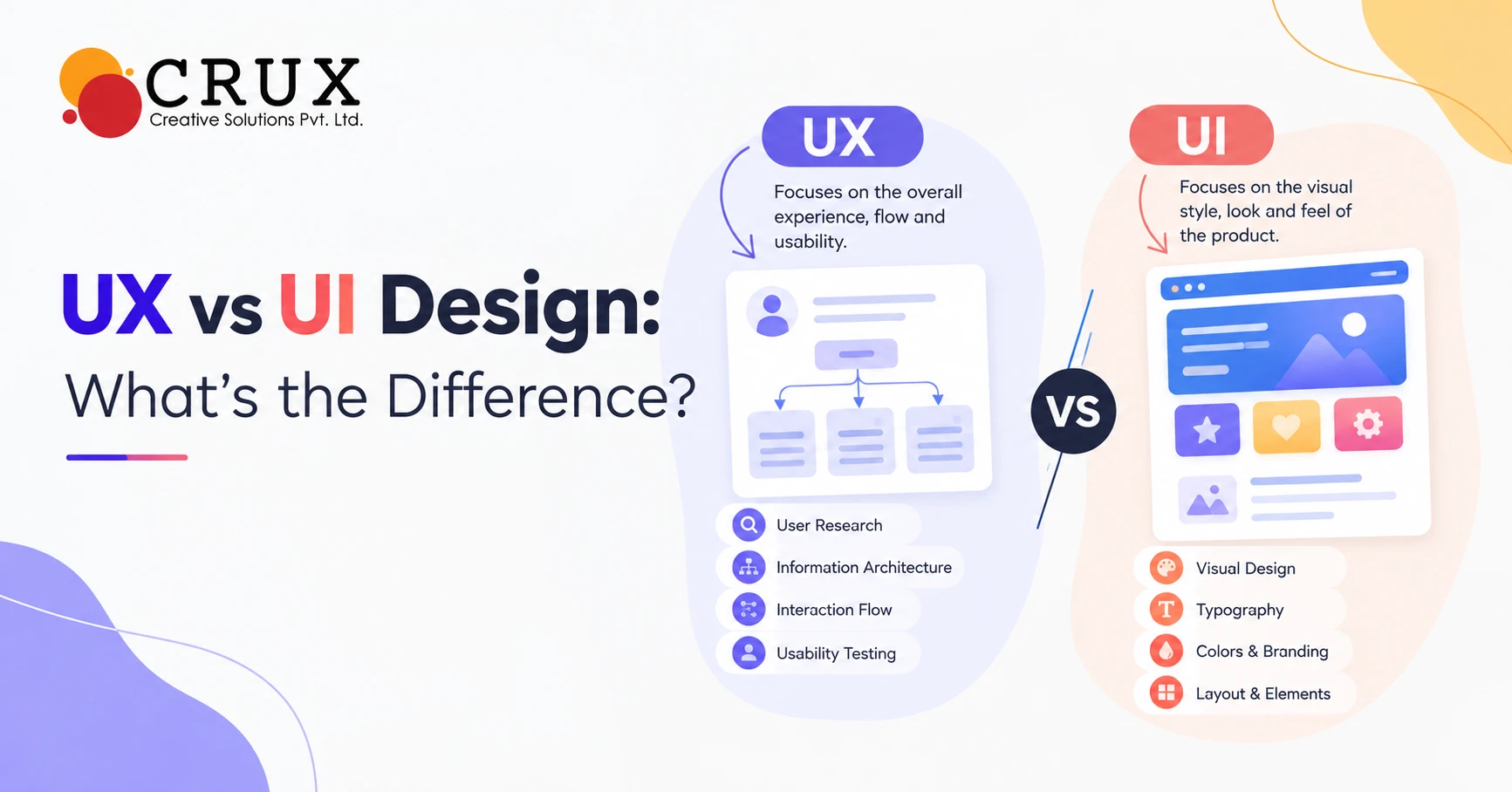
UI stands for User Interface — it's how your website looks. The colors, fonts, buttons, images, and overall visual style. UX stands for User Experience — it's how your website feels to use. How easy it is to navigate, how quickly visitors find what they need, and how smooth the journey from landing on the page to taking action actually is. A website can look stunning but be a nightmare to use, or be functional but visually unappealing. Great business websites nail both — they're beautiful and effortless to navigate at the same time.
3. How do I know if my current website actually needs a redesign?
There are some clear warning signs. If your website takes more than three seconds to load, isn't mobile-friendly, hasn't been updated in over two years, has a high bounce rate, or simply isn't generating any inquiries or leads — it's time for a redesign. Another honest test is this: show your website to someone who doesn't know your business and ask them to find your contact information or understand what you do within thirty seconds. If they struggle, your website is working against you.
4. Can a poorly designed website hurt my Google rankings?
Absolutely. Google's ranking algorithm considers dozens of factors that are directly tied to website design and performance — page loading speed, mobile responsiveness, secure HTTPS connections, ease of navigation, time spent on site, and bounce rate. A poorly designed website that loads slowly and frustrates visitors sends negative signals to Google, pushing your website further down in search results. In contrast, a well-built, fast, and user-friendly website naturally performs better in search rankings even before you invest a single rupee in SEO.
5. What is a CMS and should my business website have one?
CMS stands for Content Management System — it's essentially the backend dashboard that lets you update your website without knowing how to code. WordPress is the most popular CMS in the world, powering over 40% of all websites. Having a CMS means you can add blog posts, update your services, change images, and make general edits yourself without calling your agency every time. For most business websites, having a CMS is highly recommended because it gives you independence, saves money on minor updates, and keeps your content fresh — which both visitors and Google appreciate.

Princy Cycil
Meet Princy Cycil, Senior content writer of Crux, with 6 years of experience. She has written for tech, education, healthcare, finance, e-commerce, travel, FMCG, and lifestyle brands. A B.Com graduate, she started her career with accounting but realized she loves words more than numbers. She creates blogs, social media posts, and web content that connect and engage. When she's not writing, she's reading books, binge-watching Netflix, or sipping coffee.
Share:


 Shelly Bhasin Bawa